


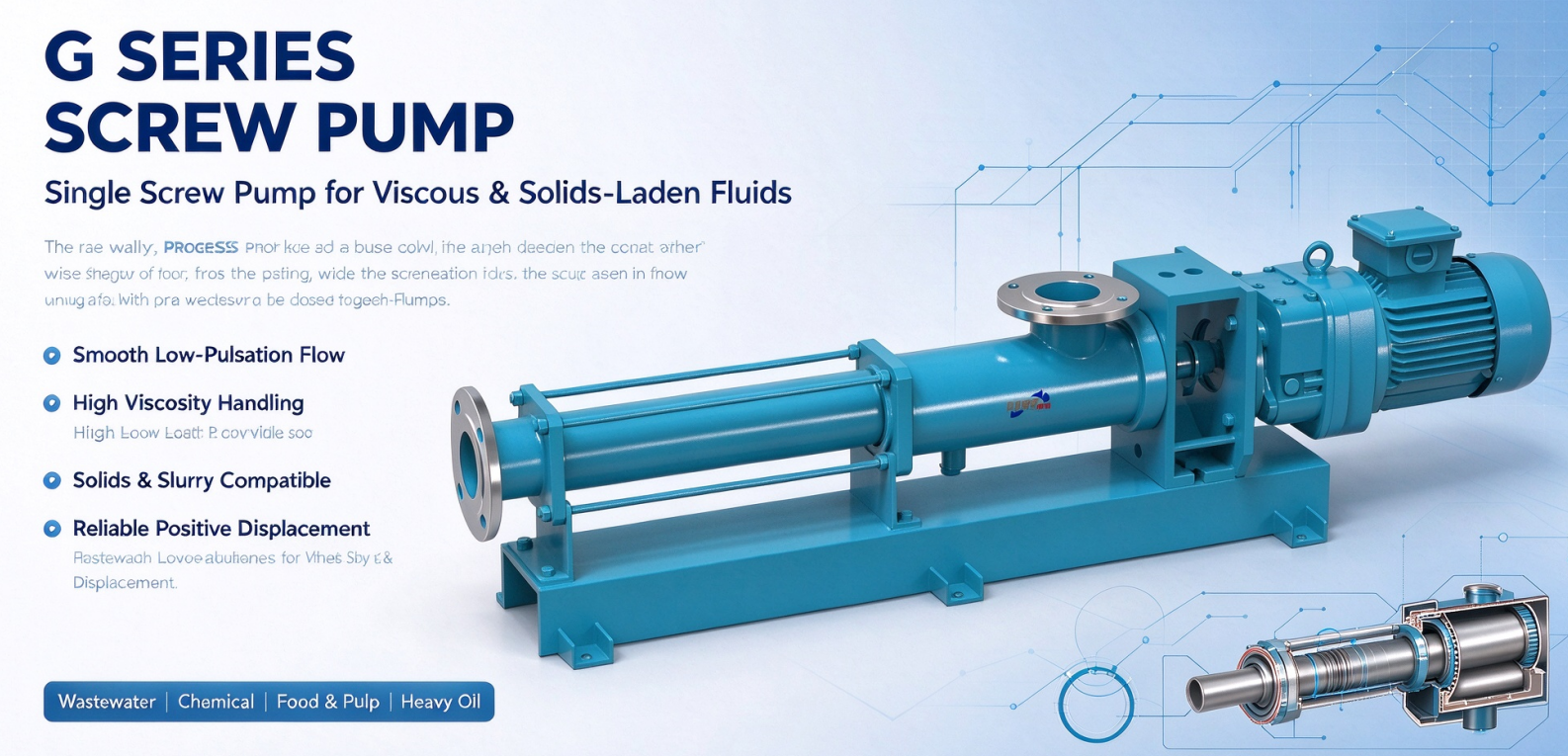
DN25-DN300 G-type Horizontal Stainless Steel Single Screw Pump
PWSG
Flow Range:0.5-200m³/h
Product Material: 304 stainless steel, cast iron, etc
Head Range:60-300m
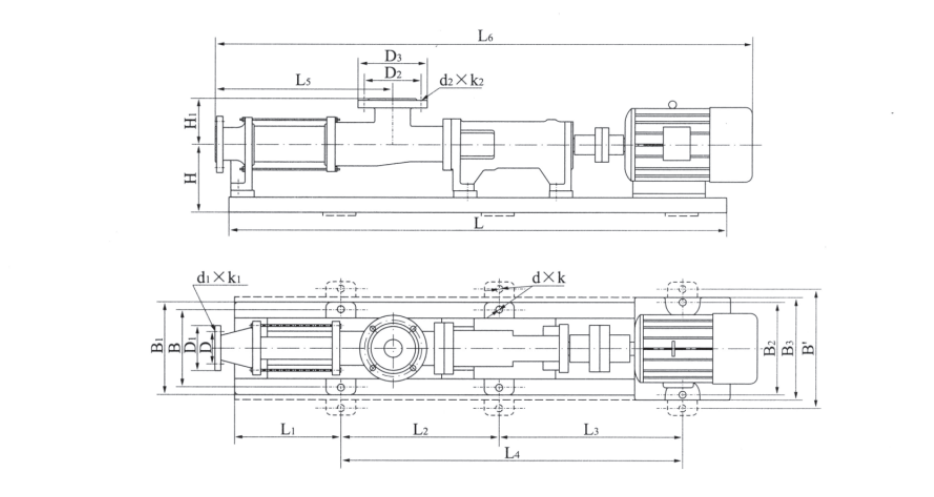
Inlet/Outlet Range:DN25-DN300
Motor Power:0.75-90kW
Conveying Materials: Various viscous pastes, cement and other media
Product Material: 304 stainless steel, cast iron, etc
Head Range:60-300m
Inlet/Outlet Range:DN25-DN300
Motor Power:0.75-90kW
Conveying Materials: Various viscous pastes, cement and other media
Quantity
G-type Horizontal Stainless Steel Single Screw Pump
Designed for efficient handling of high-viscosity, solid-laden, and corrosive fluids, this stainless steel pump combines durability with versatility. The screw pump features a modular design using 304 stainless steel and cast iron components, ensuring adaptability across chemical, environmental, and food processing applications. Its corrosion-resistant pump stainless steel construction supports wide flow ranges and long-term reliability, delivering a cost-effective solution for demanding industrial fluid transfer needs. Developed by PWS, it excels in challenging environments while minimizing maintenance.
Core Performance
- Flow coverage
0.5-200m³/h, supporting small flow precision conveying to large flow continuous operation;
- Lift capacity
60-300m, meeting the needs of short-distance lifting to long-distance conveying;
- Pipeline compatibility
Import and export diameter DN25-DN300, flexible adaptation to the pipeline system;
- Power configuration
Motor power 0.75-90kW, matching energy consumption on demand;
Technical Highlights
- Multi-material selection
This screw pump body provides 304 stainless steel, cast iron and other materials, taking into account the corrosion resistance and economy, the user can be freely selected according to the characteristics of the medium.
- Low Shear Conveying
Single-screw structure design ensures smooth fluid transportation and reduces damage to the physical properties of the medium (such as emulsion stability).
- Ease of Maintenance
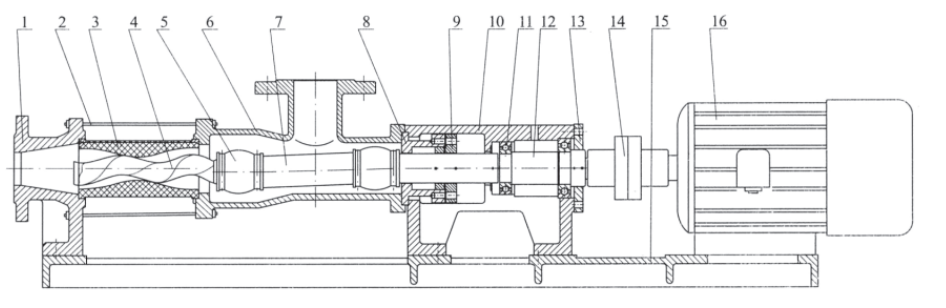
Modular stator and rotor assemblies support quick replacement, reducing downtime and maintenance costs.
Progressive Cavity Pump vs. Centrifugal Pump
| Feature / Dimension | Progressive Cavity Pump (PC Pump / Screw Pump) | Centrifugal Pump | Selection & Application Advice |
| 1. Medium Adaptability | High-Viscosity & High-Solids Handles high-viscosity fluids (e.g., sludge, pastes, heavy oil), abrasives, and media with solids/fibers without clogging | Low-Viscosity & Clean Liquids Best for water, thin chemicals, and clean or slightly contaminated fluids. Efficiency drops sharply with viscous media. | Use PC Pump for thick sludge, polymers, and heavy fluids. Use Centrifugal Pump for clean water and high-flow circulation. |
| 2. Flow & Pressure Characteristics | Constant Flow (Positive Displacement) Flow rate is directly proportional to speed (RPM) and remains stable regardless of discharge pressure changes. | Variable Flow (Dynamic) Flow rate decreases significantly as discharge pressure (head) increases along the performance curve. | Use PC Pump for precise dosing, metering, or high backpressure systems. Use Centrifugal Pump for general water transfer. |
| 3. Shear Sensitivity | Very Low Shear Force Gentle, low-speed axial movement preserves delicate fluid structures, emulsions, and polymers without damage. | High Shear Force High-speed impeller rotation (1450/2900 RPM) creates strong shear stress, which can degrade or emulsify sensitive media. | Use PC Pump for shear-sensitive polymers, flocculants, emulsions, and food products. |
| 4. Self-Priming & Dry Running | Strong Self-Priming / NO Dry Running High vacuum suction capability; however, dry running will immediately burn out the elastomeric stator due to friction heat. | Limited Self-Priming / Seal Risk Standard models require priming/foot valves; dry running will damage mechanical seals and bushings. | Install dry-running protection devices (e.g., temperature or pressure sensors) for Progressive Cavity Pumps. |
FAQ
Q1: What is the working principle and main advantages?
Principle: A metal rotor rotates inside a resilient elastomer stator, creating moving sealed cavities that continuously convey fluid.
Advantages: Smooth and pulseless flow, strong self-priming capability, and excellent ability to handle high-viscosity or shear-sensitive liquids with solids.
Q2: What applications/media is it best suited for?
High-Viscosity Fluids: Slurry, polymers, resins, sludge, grease, and thick syrups.
Abrasive & Particle-Laden Fluids: Sewage sludge, paper pulp, wastewater, and fluids with soft/hard suspended solids.
Shear-Sensitive Media: Latex, emulsions, and delicate chemical/food products (does not damage media structure).
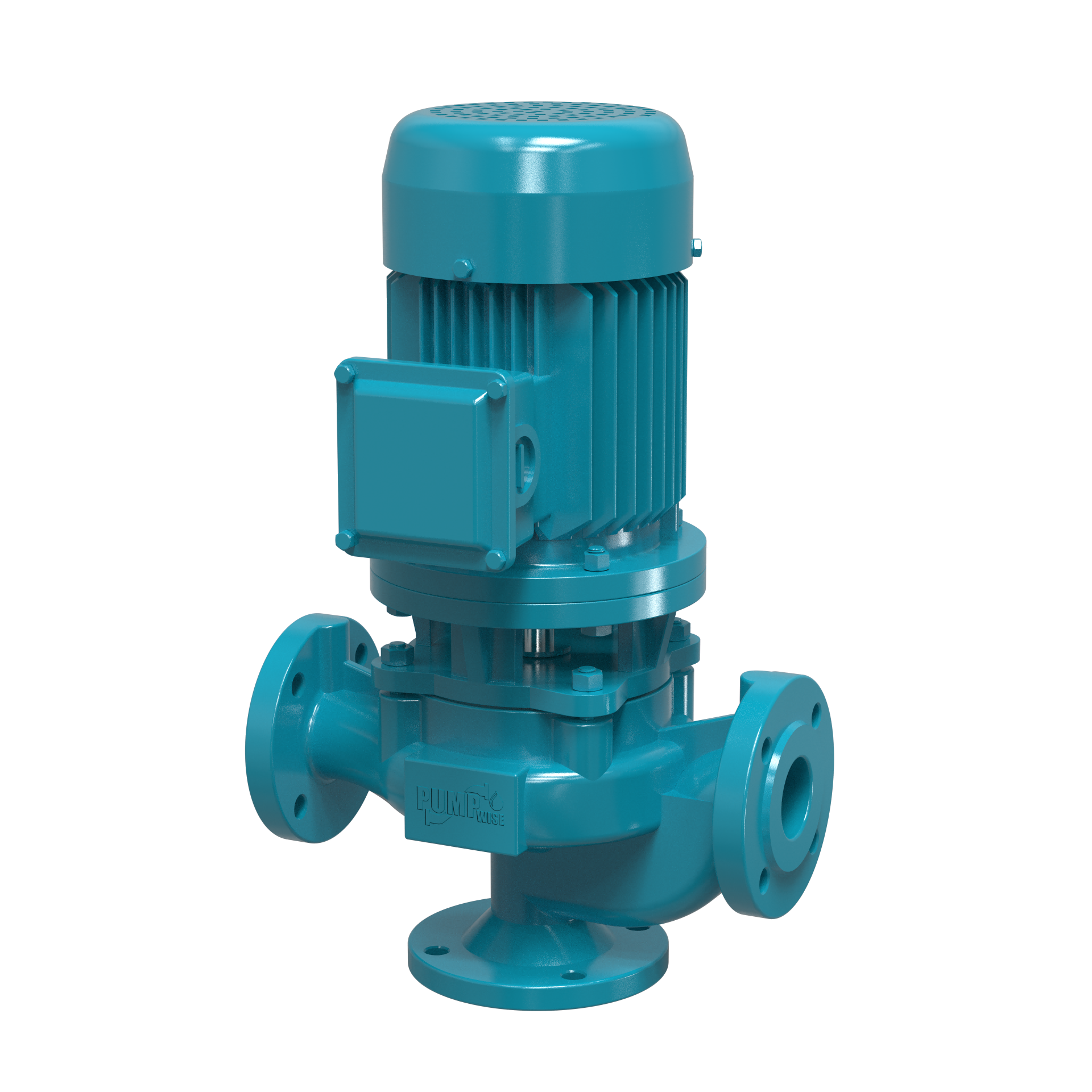
Recommend Products

Contact PUMP WISE
We Usually Respond Within 24 Hours Between Monday-Friday