

Self-Priming Mobile Flood Control Pump Truck
PWSJJCZWFX
Flow Range:300-1000 m³/h
Head Range:15 m
Motor Power:41-132KW
Inlet/Outlet Range:DN150-DN300
Head Range:15 m
Motor Power:41-132KW
Inlet/Outlet Range:DN150-DN300
Quantity
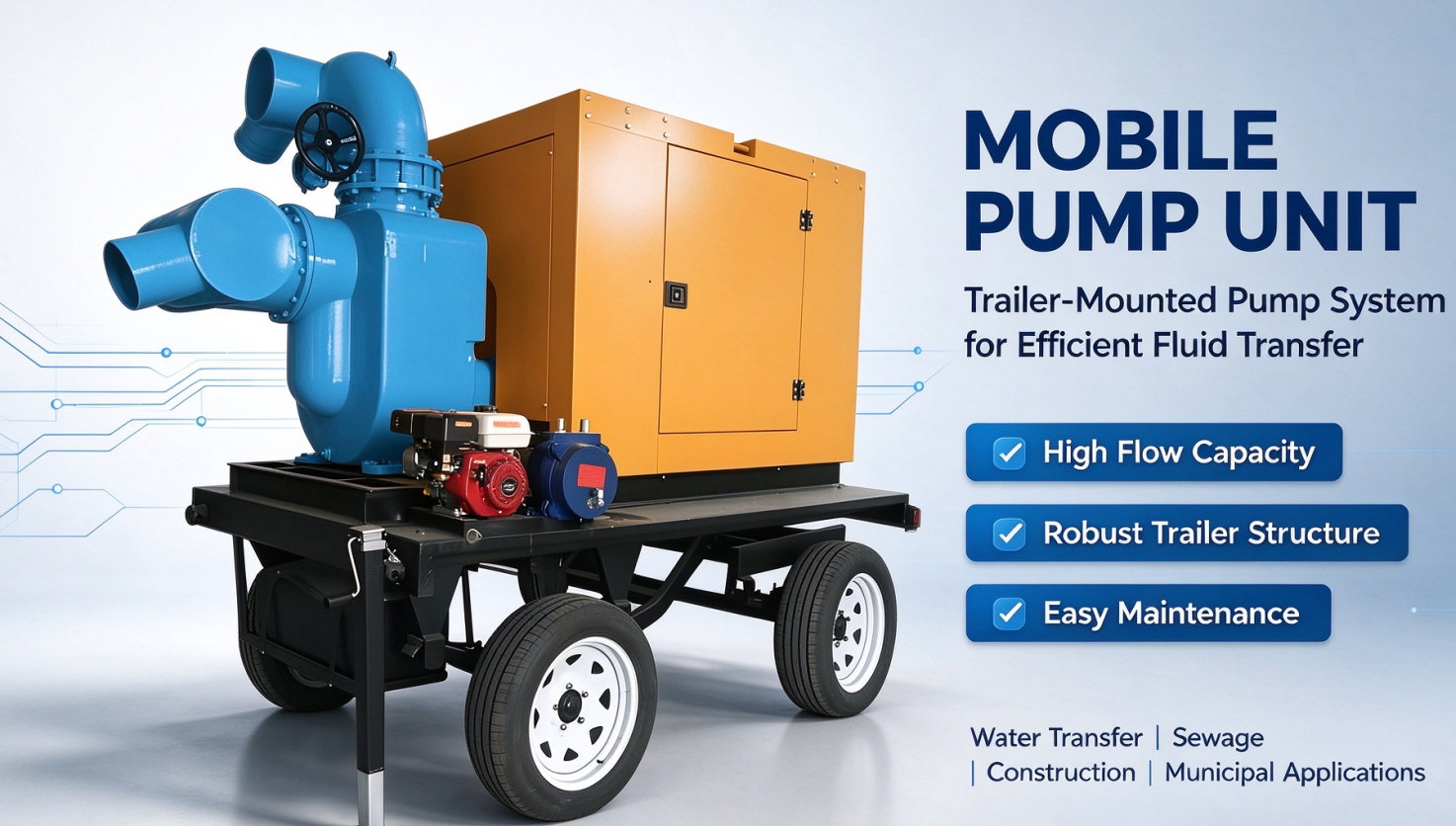
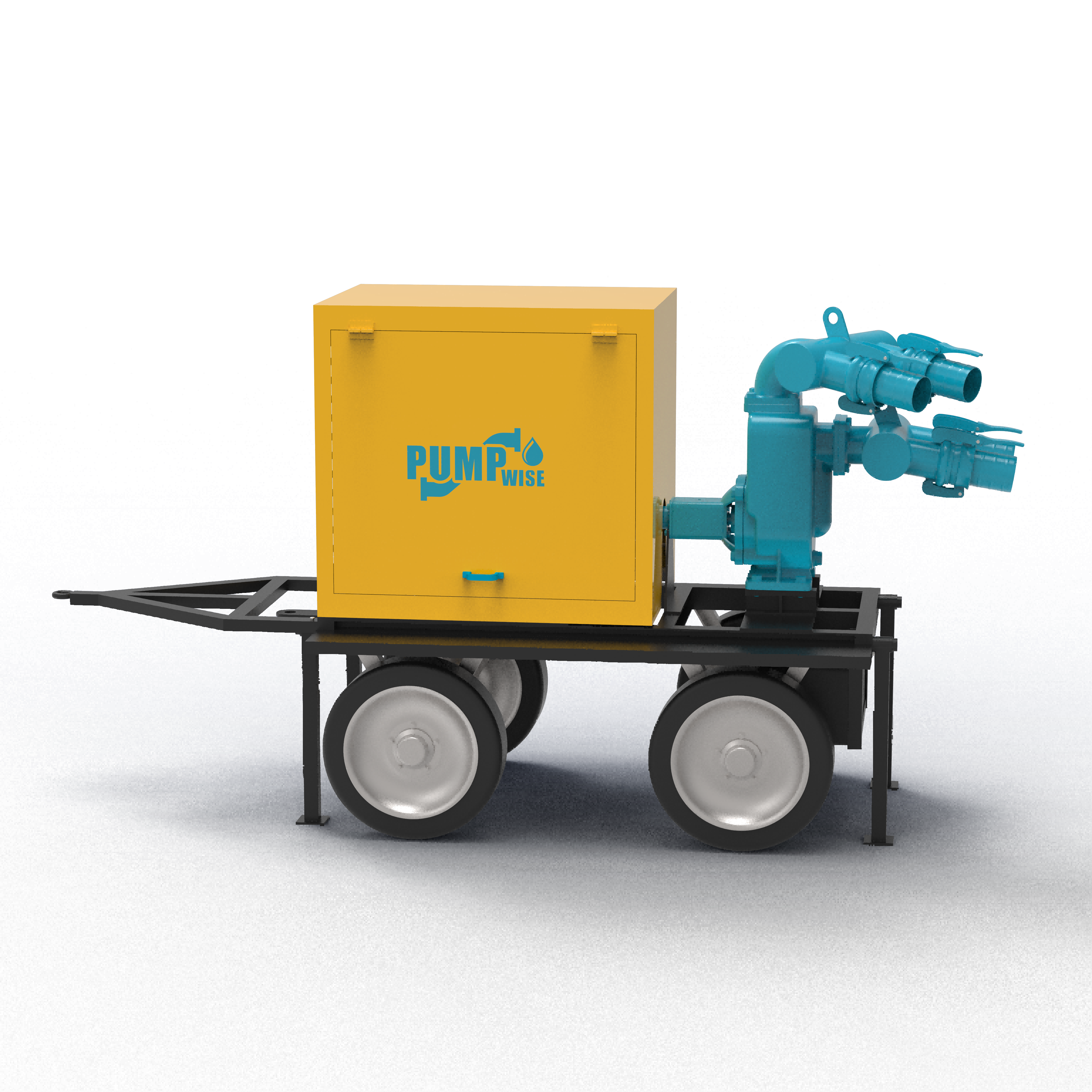
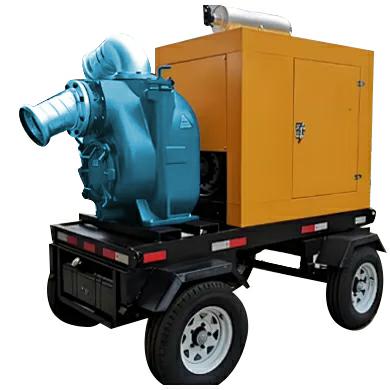
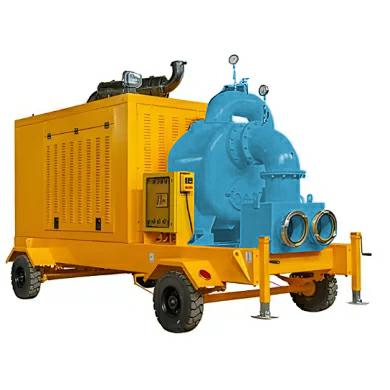
The self-priming mobile flood control pump truck is a mobile emergency equipment that integrates diesel pumps and efficient self-priming and drainage functions. It is designed specifically for flood prevention and rescue, urban waterlogging, and complex drainage conditions. Diesel pumps can be quickly started without the need for an external power supply, has strong self-priming ability and non clogging discharge performance, can handle sewage containing large particle impurities, and is equipped with a trailer structure for rapid deployment. It is suitable for municipal drainage, agricultural irrigation, industrial drainage, disaster rescue and other scenarios, and is an ideal equipment for responding to sudden floods and ensuring efficient operation of infrastructure.
Product Features
Efficient self-priming and sewage discharge capacity
- Strong self-priming performance: Adopting an axial reflux external mixing design, there is no need to install bottom valves or fill water, and a vacuum environment is quickly formed after startup, achieving efficient self-priming and meeting the fast response requirements of flood control pumps.
- Non clogging discharge: Optimized impeller and flow channel, capable of treating wastewater containing large solid particles and long fiber impurities, avoiding blockage, suitable for discharge requirements in complex working conditions.
Diesel powered drive
- Independent power system: equipped with high-performance diesel engine, no need to rely on external power source, suitable for outdoor, disaster stricken or unstable power areas, ensuring long-term continuous operation.
- Quick start: The diesel engine can be started and put into full load operation in a short period of time to meet emergency drainage needs.
Products Advantages
Convenient mobility and compact structure
- Integrated design: The diesel engine, pump body, and control system are integrated into one, with a compact structure, light weight, and easy manual handling or vehicle transportation.
- Trailer design: Optional two/four-wheel trailer or outdoor design, suitable for rapid deployment in different scenarios.
Efficient and energy-saving, stable operation
- High efficiency design: Direct connection technology between diesel engine and water pump reduces energy loss and improves operational efficiency.
- Low maintenance cost: Modular design, easy disassembly and replacement of key components, reducing maintenance costs.
| Comparison Dimension | Diesel Engine Driven Mobile Self-Priming Pump | Standard Self-Priming Pump (Electric Motor Driven) |
| Power Source | Diesel engine with self-contained fuel power. | Electric motor, requiring external AC power supply (e.g., 380V/220V). |
| Mobility & Flexibility | Very High. Equipped with trailers, wheel assemblies, or mobile chassis; can be towed to job sites at any time. | Low. Typically installed permanently in pump stations, on bases, or at specific pit locations. |
| Applications | Municipal flood control & emergency drainage, off-grid field construction, disaster relief, remote agricultural irrigation. | Factory circulating water systems, fixed wastewater treatment stations, long-term construction dewatering, indoor pump rooms. |
| Grid Dependency | Zero Dependency. Operates fully independently of the power grid, ideal for remote or power-outage scenarios. | High Dependency. Cannot operate without power supply (requires an external generator if grid fails). |
FAQ
Q1: Do I need to prime the pump with water before every operation?
-First-Time Use: Yes, filling the pump casing with priming liquid is mandatory before the initial run.
-Subsequent Use: The pump holds liquid in its housing and operates with a check valve, enabling automatic self-priming without re-filling (if equipped with a vacuum-assist system, priming is even faster).
Q2: What are the main maintenance requirements and common wearable spare parts?
-Routine Maintenance: Regularly check and replace engine oil, fuel filters, and air filters; inspect mechanical seals and flange gaskets.
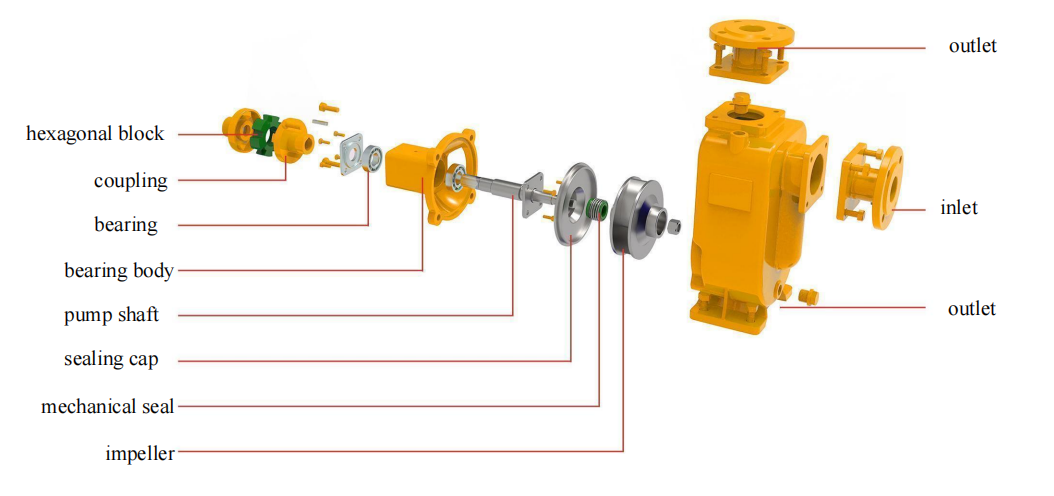
-Key Wear Parts: Impeller, mechanical seal, check valve rubber flap, and housing O-ring
Contact PUMP WISE
We Usually Respond Within 24 Hours Between Monday-Friday