Split-Coupled Inline Pumps: High-Efficiency Industrial Fluid Handling Solutions
1.Introduction
Split-Coupled Inline Pumps: High-Efficiency Industrial Fluid Handling Solutions
Introduction
In modern industrial manufacturing, commercial building environmental control (HVAC), and municipal water supply and drainage engineering, the efficiency and reliability of fluid handling systems directly dictate overall operating costs and system stability. With rising global demand for energy conservation in industrial equipment, the Split-Coupled Inline Pump has emerged as a primary choice for global procurement managers and system integrators, thanks to its compact inline design, superior hydraulic performance, and remarkably low maintenance costs. This article delivers a comprehensive B2B technical guide detailing the working principles, structural differences, application scenarios, and selection highlights of split-coupled inline pumps.
Q1: What is a Split-Coupled Inline Pump, and what is its core operating principle?
-
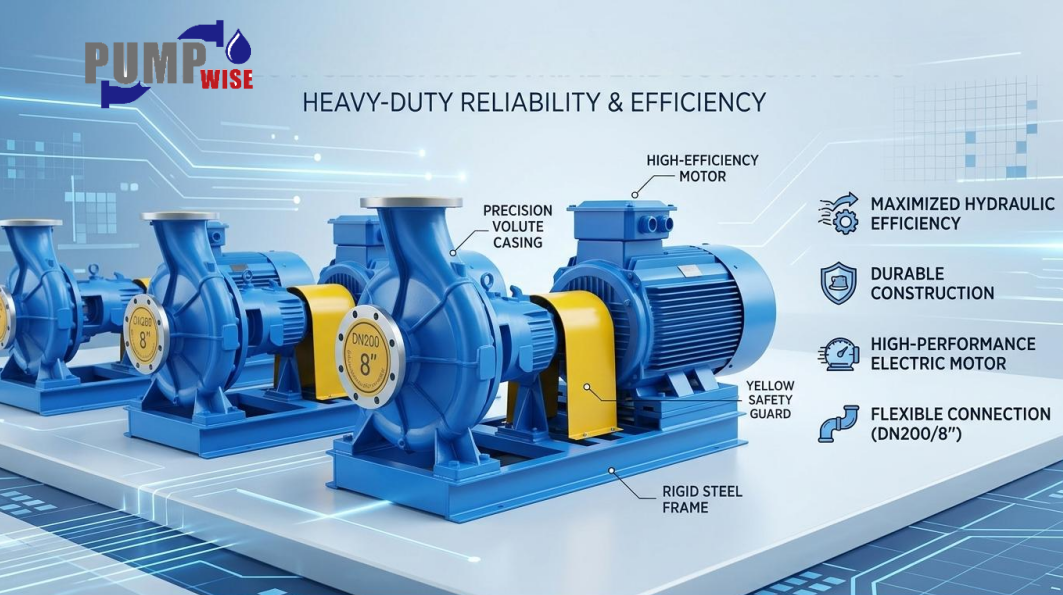
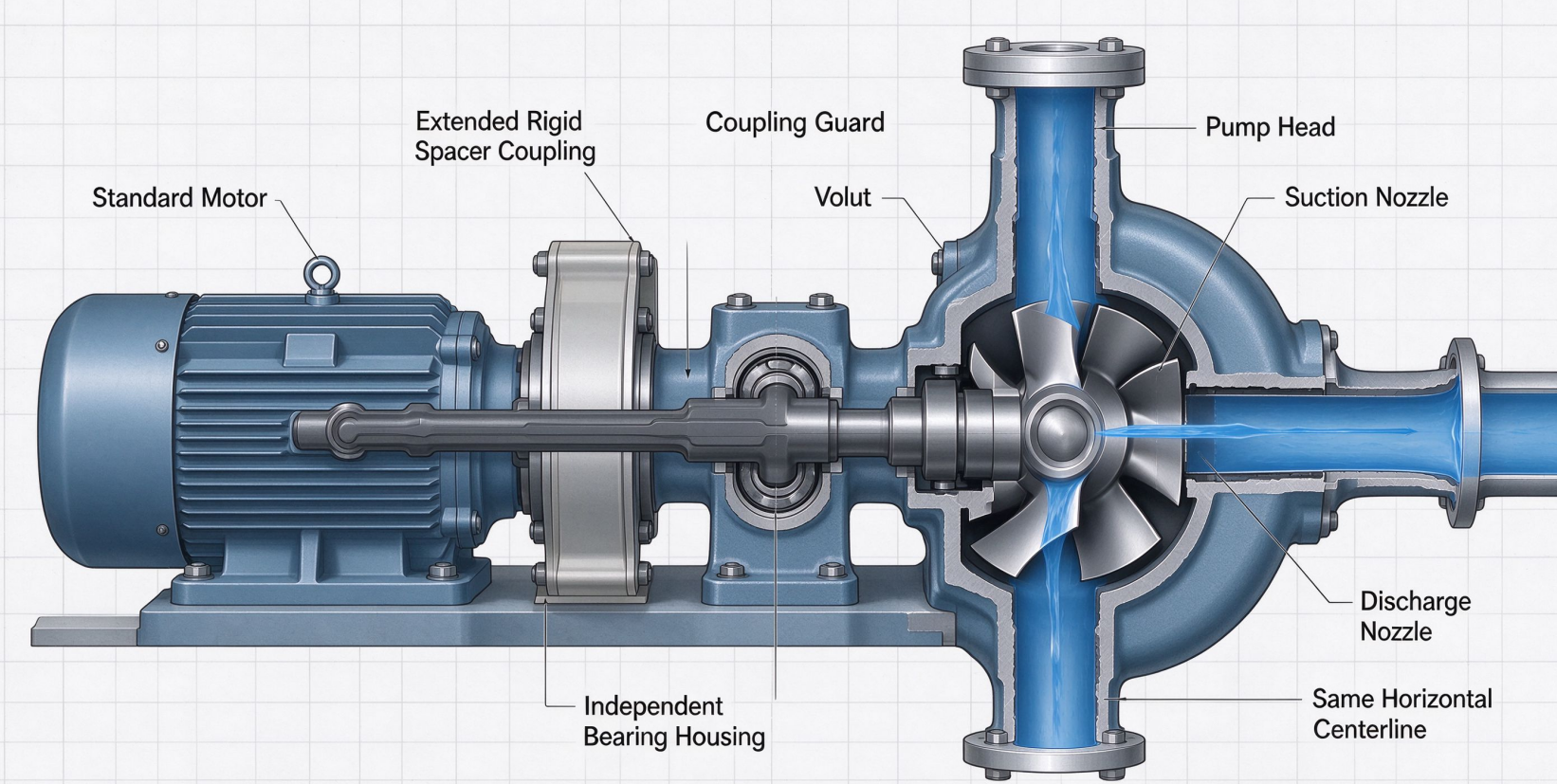
A: A split-coupled inline pump features an "in-line" design with suction and discharge nozzles positioned on the same horizontal centerline, using an extended rigid spacer coupling to mechanically connect the pump head to a standard motor. Its core operating principle and structural features include:
-
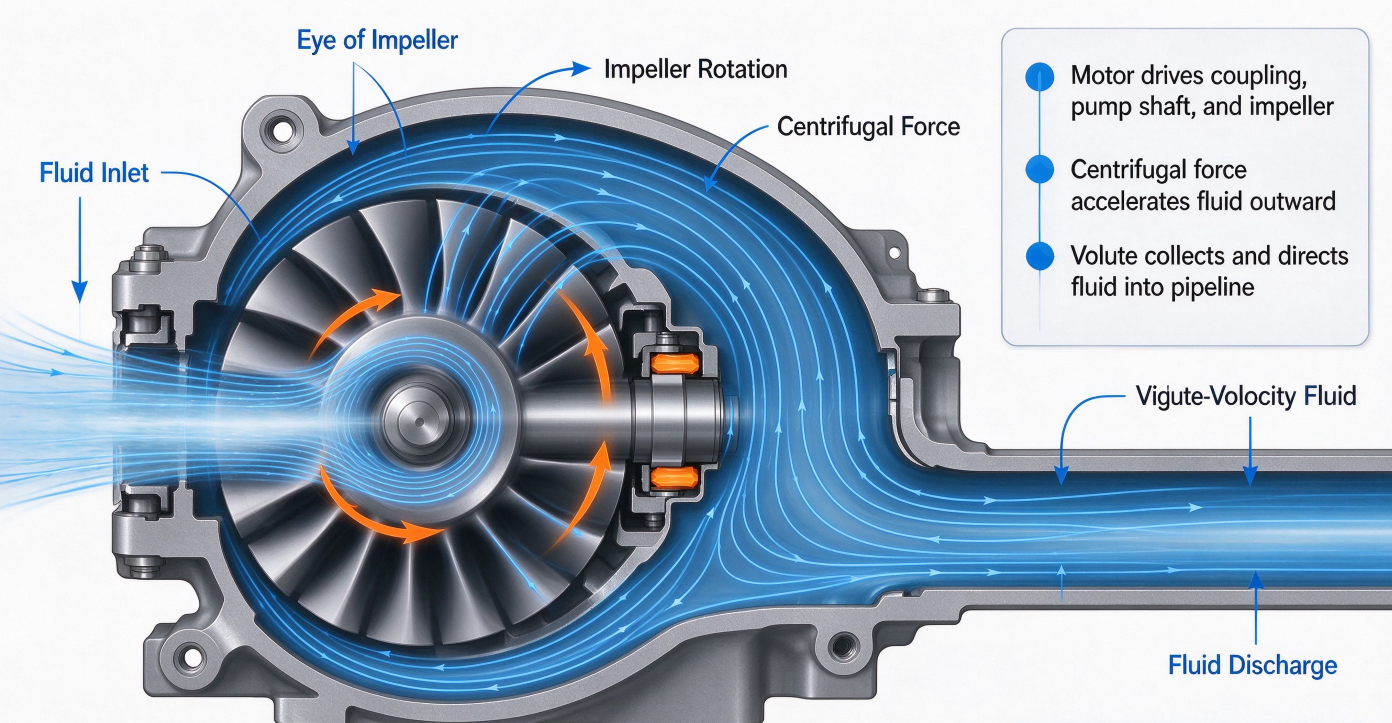
Fluid Dynamic Power Transmission: The motor rotates the extended spacer coupling, driving the pump shaft and impeller at high speeds. Under centrifugal force, fluid is drawn into the impeller center and thrown outward with high kinetic and pressure energy, collected by the volute, and discharged directly into the pipeline.
-
Inline Direct-Fit Architecture: Equal-diameter suction and discharge flanges align on a single centerline, allowing the pump to be installed directly in a pipeline like a valve without altering existing piping runs.
-
Isolated Bearing Frame & Mechanical Seal: An independent bearing house isolates the motor shaft from the pump shaft, effectively absorbing hydraulic axial thrusts to ensure smooth operation and significantly extend mechanical seal longevity.
-
-