2025-10-30
Common faults during the installation of pipeline centrifugal pumps
Common Faults During the Installation of Pipeline Centrifugal Pumps
In industrial production, municipal water supply, and building facilities, operational failures of centrifugal pumps due to improper installation are increasingly common.
Research indicates that operational oversights during setup account for nearly 30% of early pump degradation and unexpected shutdowns. While installation may seem routine, missing key technical nuances often results in higher power consumption, accelerated wear, and potential hazards to systemic safety.
Common Installation Pitfalls: A Chain Reaction from Foundation to Piping
- Unstable Foundation: A Breeding Ground for Vibration and Noise
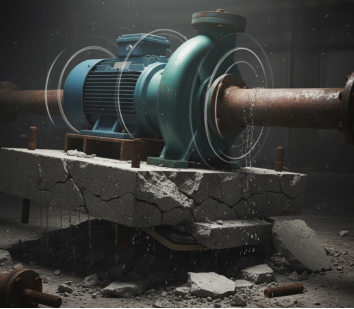
Vibration generated by centrifugal pumps during operation needs to be absorbed by a stable foundation. If the installation ground is uneven or vibration damping measures are lacking, vibration may be transmitted to the piping system, leading to loosening of pipe fittings, seal failure, and even structural fatigue over time. Technicians recommend checking the flatness of the foundation before installation, using vibration damping pads or spring supports, and ensuring that the anchor bolt tightening torque meets equipment requirements.
- Improper Piping Configuration: An Invisible Channel for Efficiency Loss
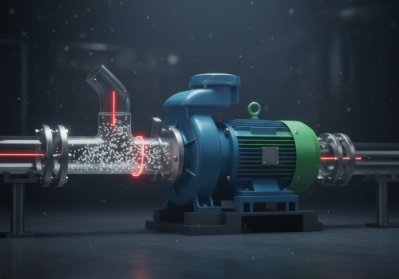
In some projects, to reduce costs, right-angle elbows or reduced-diameter pipes are used at the pump inlet and outlet, resulting in a significant increase in fluid resistance. For example, in one project, excessively long and unsupported inlet pipes caused cavitation, significantly reducing pump efficiency. Experts emphasized that inlet and outlet pipes should have the shortest possible straight sections, avoid sharp bends, and maintain a pipe diameter consistent with the pump body diameter to minimize turbulence losses.
- Coupling Misalignment: The "Hidden Killer" of Bearings and Seals
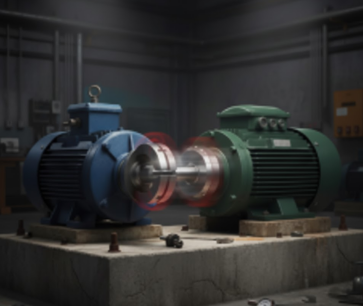
If the axial or radial misalignment of the motor-pump coupling exceeds the standard during installation, it can cause bearing overheating, seal leakage, or even shaft breakage. Technicians point out that coupling alignment errors must be controlled within a very small range; otherwise, the additional stress generated during equipment operation will accelerate component wear. It is recommended to use professional tools for precise adjustment and conduct regular re-inspections.
- Priming and Venting Leaks: The "Trigger" for Air Binding
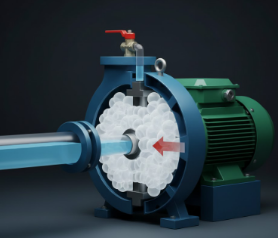
Failure to adequately prime or vent the centrifugal pump before startup can lead to residual air inside the pump, forming "air binding" and preventing normal liquid delivery. In practice, some operators fail to open the vent valve or perform incomplete priming, resulting in repeated equipment startup failures. Standard procedures require that the vent valve be opened during pump priming until liquid flows out continuously without air bubbles, ensuring the impeller is completely submerged.
- Preventing Accidental Ingress of Nuts and Washers
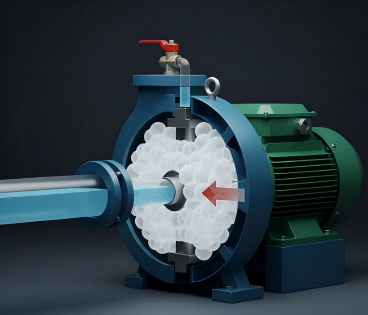
At centrifugal pump installation sites, workspace constraints are a common challenge. Technicians often operate in cramped environments surrounded by complex piping, specialized tools, and various flange components. Because the installation of the outlet flange is a collaborative process involving multiple interlocking steps, it is a high-risk zone for human error. A momentary lapse in focus or a slip of the hand can result in a small nut or washer falling directly into the pump casing.
These seemingly insignificant small objects, once left inside the pump, pose a significant hazard. When a centrifugal pump starts up, nuts or small washers can easily become lodged in the narrow gap between the impeller and the pump body due to the high-speed flow of the medium within the pump chamber. This obstructs impeller operation, leading to a decrease in pump performance parameters such as flow rate and head, affecting normal production. In severe cases, it can cause impeller deformation and damage due to excessive stress, or even pump shaft breakage. Furthermore, these small objects can scratch the dynamic and static sealing surfaces of the mechanical seal, compromising the seal's precision and causing media leakage.
Locating such small objects is notoriously difficult due to the pump's complex internal geometry. Often, the only solution is a complete teardown of the unit. This process is not only labor-intensive and time-consuming but also results in unplanned downtime that disrupts the entire production schedule. To mitigate these risks, it is vital to enforce strict standardized operating procedures and maintain rigorous on-site supervision to ensure every detail is managed with precision.
Industry Call
Strengthen Installation Standardization and Personnel Training. Experts from the Technical Committee of the China Pump Industry Association stated that the installation quality of pipeline centrifugal pumps directly affects their operational stability and total life-cycle cost. Currently, some installation teams in the market lack systematic training and operate solely based on experience, leading to frequent problems. Enterprises should prioritize selecting qualified installation service providers and strictly adhere to relevant national technical specifications.
Conclusion: Details Determine Equipment's "Vitality"
As the industrial sector increasingly demands higher equipment reliability, the installation of pipeline centrifugal pumps is shifting from "experience-driven" to "standard-driven." Every detail in the installation process can become a "key" to the efficient operation of the equipment. Only by eliminating complacency and strictly following standards can a win-win situation of cost reduction, efficiency improvement, and safe production be achieved.