2025-08-18
Classifications of Modern Sewage Pumps: A Complete Guide
Classifications of Modern Sewage Pumps: A Complete Guide
What Is a Sewage Pump
A sewage water pump is a specialized piece of equipment designed to transport wastewater, which often contains solid particles, fibrous materials, and various other impurities. It is widely used in municipal, industrial and construction applications, and is essential for effective wastewater management and environmental protection.
Why There Are Different Types of Sewage Pumps
Wastewater handling conditions are often complex and variable, making a single pump type insufficient to meet all operational requirements. As a result, sewage pumps are classified into multiple types based on their structures, working principles and specific application scenarios, so that they can achieve better performance in different working environments.
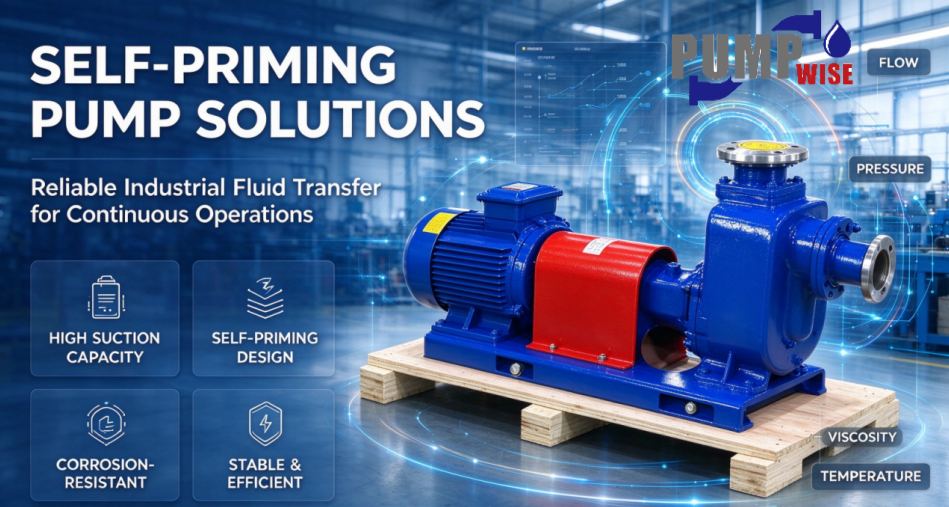
Horizontal self-priming sewage pump is a special type of ground mounted pump. It can automatically remove air from the suction pipeline after the pump body is first filled with liquid, without relying on the bottom valve, through its internal structural design, thus achieving automatic suction.
Technical features: This type of pump usually uses a semi open impeller and has good non clogging performance. Its self-priming height can reach several meters, making it particularly suitable for use in situations where frequent start stop operations are required, or where the suction pipeline is long and cannot be pre filled with water.
Typical applications: Temporary drainage engineering, mobile pump trucks, and in situations where submersible or vertical pumps cannot be installed, such as river dredging, emergency rescue and drainage.
Technical features: This type of pump usually uses a semi open impeller and has good non clogging performance. Its self-priming height can reach several meters, making it particularly suitable for use in situations where frequent start stop operations are required, or where the suction pipeline is long and cannot be pre filled with water.
Typical applications: Temporary drainage engineering, mobile pump trucks, and in situations where submersible or vertical pumps cannot be installed, such as river dredging, emergency rescue and drainage.

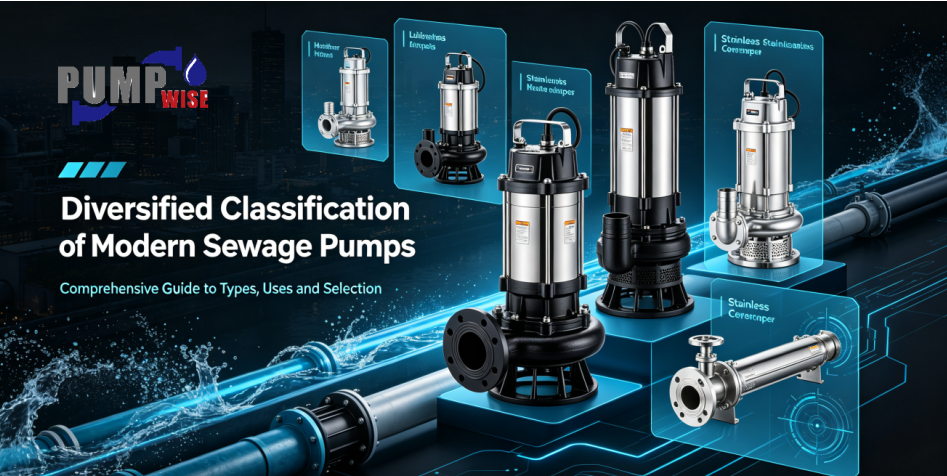
Submersible pumps are currently one of the most widely used types of sewage pumps. Its biggest feature is that the motor and pump body are tightly sealed together, which can be completely submerged in sewage for operation. This design not only saves valuable ground space without the need to build a dedicated pump room, but also operates in water with low noise and good heat dissipation, extending the lifespan of the motor.

Single and double-pipe submersible sewage pumps are specialized types of submersible pumps. The single-pipe pump features a compact structure, making it ideal for conventional sewage disposal. Conversely, the double-pipe pump is specifically engineered to process wastewater with significant amounts of solid particles and long fibers. Its unique design, which includes a special pipeline and impeller, effectively prevents blockages and makes it particularly well-suited for demanding conditions like those found in municipal sewage systems and construction sites.


Pipeline sewage pump, also known as pipeline centrifugal pump, is designed to be directly installed in the pipeline system, like a part of the pipeline itself. Its inlet and outlet are located on the same axis, with a compact structure and small footprint, and can be flexibly installed on any pipe section that requires pressurization or transportation.

Technical features: This type of pump usually uses a special non clogging impeller to deal with solid debris that may exist in sewage. It simplifies the installation process and reduces the requirements for installation space, making it an ideal choice for urban sewage pumping stations and building basement drainage.
A vertical sewage pump is designed with the motor located above the liquid level, using a long shaft to drive the submerged pump body. This separated design eliminates the risk of motor sealing failure that submersible pumps face, ensuring the motor operates safely in a dry environment and significantly enhancing the equipment's reliability.