2026-01-15
PWS Hose Pumps The Ultimate Fluid Solution
Hose Pumps The Ultimate Fluid Solution
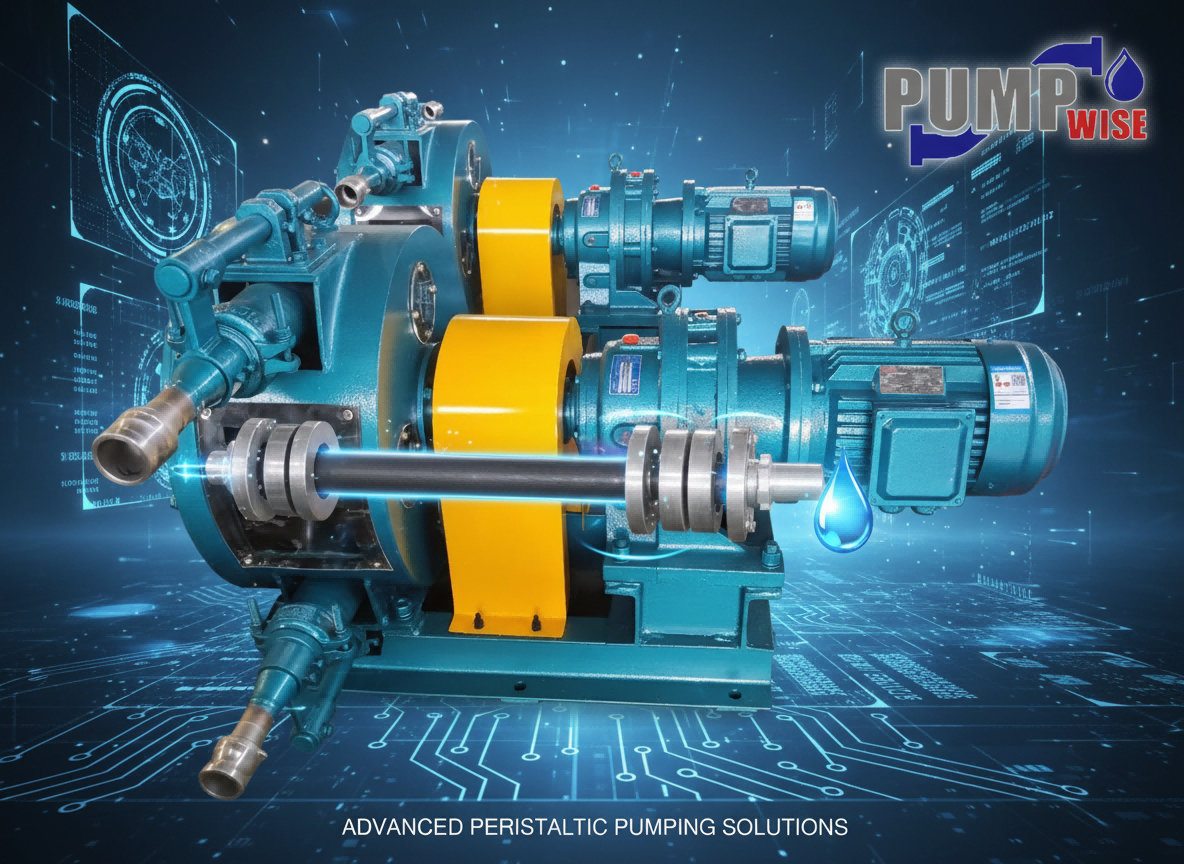
A hose pump, also often called a peristaltic pump in laboratories or light industry, is a very special type of positive displacement pump.The working principle of a hose pump is very interesting, much like squeezing a plastic tube filled with water with your fingers; as your fingers move forward, the water in the tube is pushed forward.The PWS Series peristaltic hose pump is a high-performance solution designed for the most demanding industrial applications. With its seal-less design and superior dry-running capabilities, it excels in transferring abrasive slurries and sensitive fluids with high precision and minimal maintenance.
- Q1 What is a Peristaltic Pump?
- Q2 How does a peristaltic pump work?
- Q3 Why are peristaltic pumps so unique?
- Q4 What are the application areas of peristaltic pumps?
Q1 What is a Peristaltic Pump?
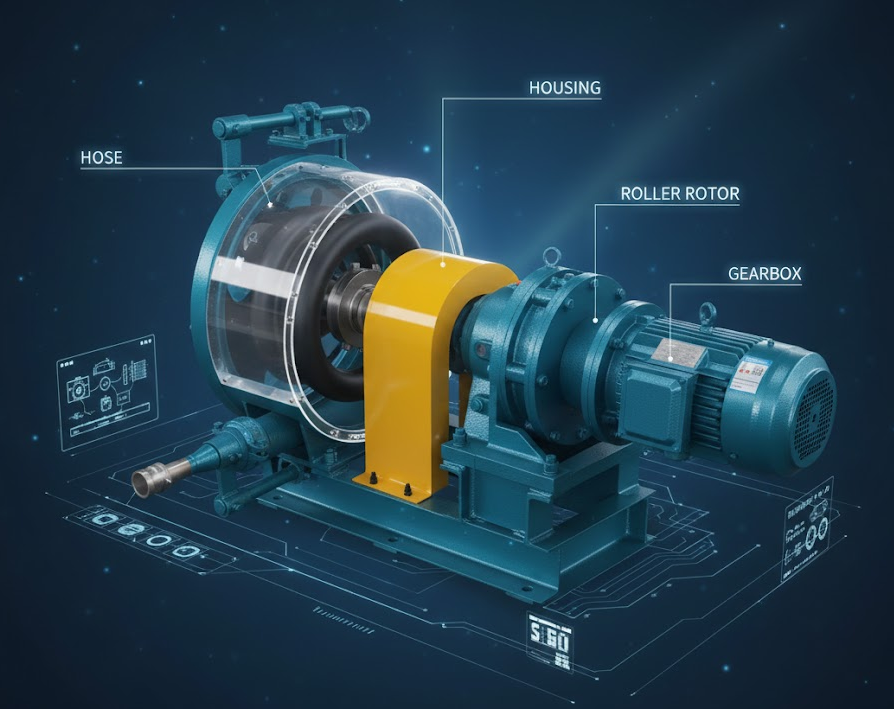
1. Core Structure
Circular Pump Casing: The front has a circular casing with a viewing window, inside which is a specially designed rubber squeeze tube.
Roller Mechanism: A rotating mechanism (rollers or sliders) is vaguely visible through the viewing window; these generate suction and pressure by squeezing the tube.
Protective Cover: Located between the motor/gearbox and the pump body, it protects the drive shaft and coupling.
Circular Pump Casing: The front has a circular casing with a viewing window, inside which is a specially designed rubber squeeze tube.
Roller Mechanism: A rotating mechanism (rollers or sliders) is vaguely visible through the viewing window; these generate suction and pressure by squeezing the tube.
Protective Cover: Located between the motor/gearbox and the pump body, it protects the drive shaft and coupling.
2. Power System
Motor + Gearbox: A blue electric motor and gearbox are connected to the right side of the pump. Since peristaltic pumps typically require low speed and high torque to squeeze the thick tubing, a gearbox is essential.
Motor + Gearbox: A blue electric motor and gearbox are connected to the right side of the pump. Since peristaltic pumps typically require low speed and high torque to squeeze the thick tubing, a gearbox is essential.
Q2 How does a peristaltic pump work?
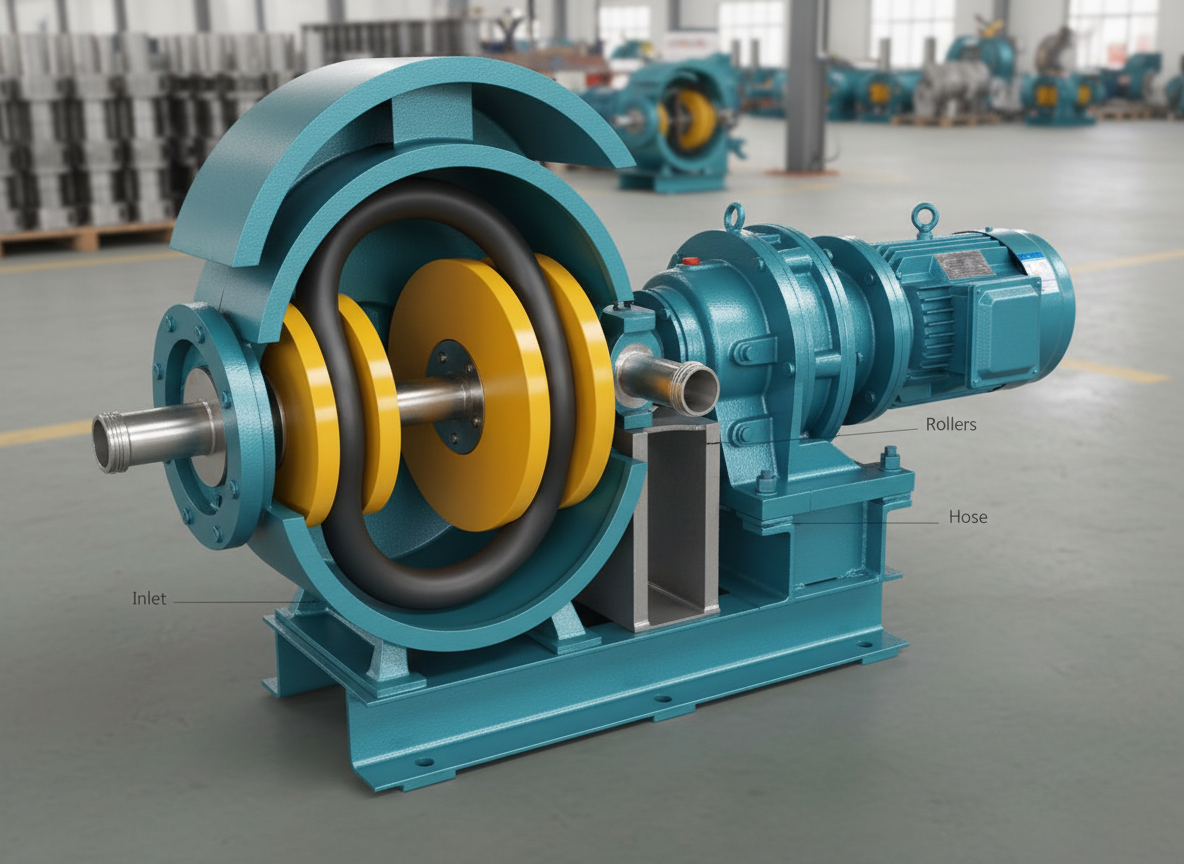
The core components of a peristaltic pump include: a highly elastic rubber tube, a rotor with pressure rollers (or shoes), and a pump housing.
The core components of a peristaltic pump include: a highly elastic rubber tube, a rotor with pressure rollers (or shoes), and a pump housing.
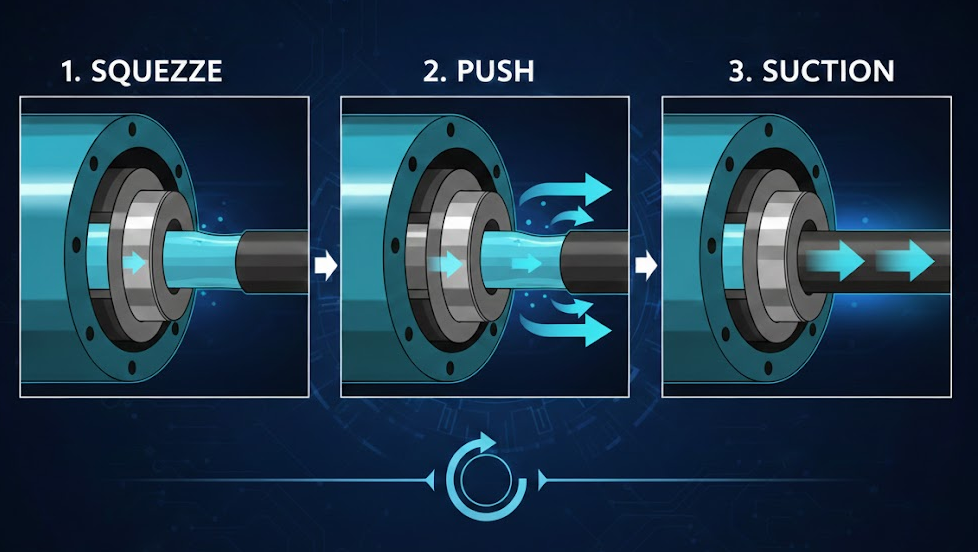
1. Compression: The pressure rollers on the rotor act like "heavy-duty rollers," tightly pressing the tube inside the pump housing, completely flattening the tube and creating a seal point.
2. Propulsion: As the motor drives the rotor to rotate, the pressure rollers move along the tube, forcefully pushing the liquid inside the tube towards the outlet, like "squeezing toothpaste."
3. Suction (Self-priming): When the pressure rollers move away, the flattened tube quickly rebounds to its original shape due to its elasticity. This instantaneous action creates a strong vacuum suction inside the tube, continuously drawing liquid from the outside into the tube.
2. Propulsion: As the motor drives the rotor to rotate, the pressure rollers move along the tube, forcefully pushing the liquid inside the tube towards the outlet, like "squeezing toothpaste."
3. Suction (Self-priming): When the pressure rollers move away, the flattened tube quickly rebounds to its original shape due to its elasticity. This instantaneous action creates a strong vacuum suction inside the tube, continuously drawing liquid from the outside into the tube.
PWS Perspective: The elasticity of the tube determines the pump's performance. PWS always emphasizes that a high-quality tube is the "heart" of the pump. By precisely matching the pressure roller pressure with the tube's elasticity, we can ensure that the pump maintains constant flow accuracy even during long-term operation.
Q3 Why are peristaltic pumps so unique?
Peristaltic pumps are indispensable in industry because they possess the following "core" advantages:
Peristaltic pumps are indispensable in industry because they possess the following "core" advantages:
- Truly "zero leakage, no contamination": The fluid flows only inside the hose, without contacting the pump casing, rotor, or other mechanical parts. This means that even highly toxic and corrosive chemicals will not corrode the pump body; similarly, the pump will not contaminate food or pharmaceuticals.
- Unafraid of "dirty, viscous, and hard" materials: It can transport slurries containing large amounts of sand, fibers, or solid particles. It can pump almost anything that can fit into the hose.
- Superb self-priming and dry-running capabilities: It is one of the pumps with the strongest self-priming capabilities on the market (can draw up to 9 meters deep), and unlike centrifugal pumps, it will not burn out even if there is no liquid in the tube (dry running).
- Low shear force: Its pumping action is very gentle and will not damage delicate components in the liquid (such as cells, long-chain polymers, or food particles).
Q4 What are the application areas of peristaltic pumps?
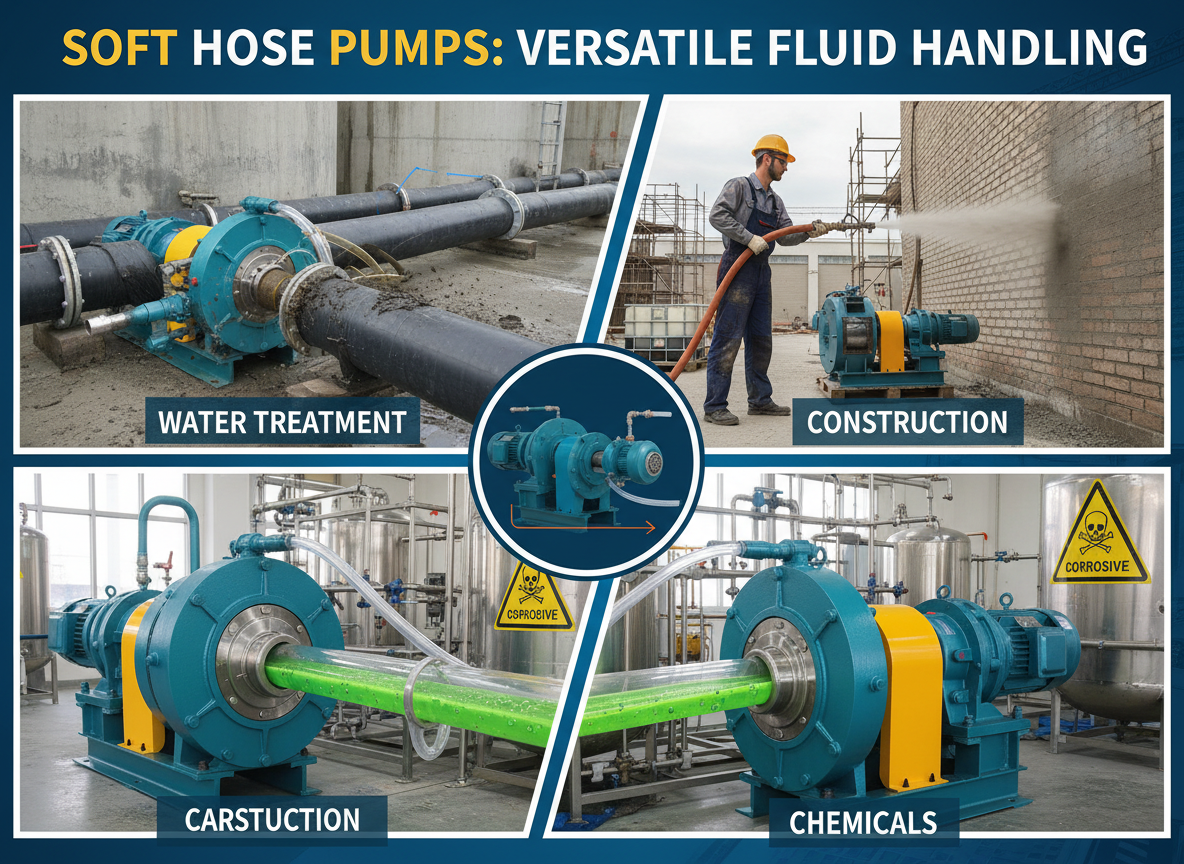
1. Water Treatment and Environmental Protection
It is the preferred choice for handling sludge and chemical agents in wastewater treatment plants.
1. Water Treatment and Environmental Protection
It is the preferred choice for handling sludge and chemical agents in wastewater treatment plants.
- Concentrated sludge pumping: Transporting extremely viscous primary sludge and activated sludge containing long fibers or sand and gravel.
- River dredging: Used to pump silt from riverbeds containing debris such as branches and plastic bags.
- River dredging: Used to pump silt from riverbeds containing debris such as branches and plastic bags.
2. Construction and Building Materials
At construction sites, it can transport heavy materials like a "mobile blood vessel."
At construction sites, it can transport heavy materials like a "mobile blood vessel."
- Mortar spraying: Transporting and spraying cement mortar, lightweight concrete, or fire-resistant coatings.
- Tunnel grouting: Used for pressure grouting to seal leaks during shield tunneling or tunnel reinforcement.
- Ceramic industry: Transporting highly abrasive ceramic glazes and clay slurries.
- Tunnel grouting: Used for pressure grouting to seal leaks during shield tunneling or tunnel reinforcement.
- Ceramic industry: Transporting highly abrasive ceramic glazes and clay slurries.
3. Chemical Industry
Handling the "most troublesome" liquids, avoiding leakage risks.
- Highly corrosive liquids: Such as hydrochloric acid, concentrated sulfuric acid, sodium hydroxide, etc.
- Sensitive media: Transporting latex, resins, adhesives, and other substances that are sensitive to shear force and easily deteriorate due to heat or agitation.
- High-viscosity fluids: Transporting paints, coatings, inks, etc.
Handling the "most troublesome" liquids, avoiding leakage risks.
- Highly corrosive liquids: Such as hydrochloric acid, concentrated sulfuric acid, sodium hydroxide, etc.
- Sensitive media: Transporting latex, resins, adhesives, and other substances that are sensitive to shear force and easily deteriorate due to heat or agitation.
- High-viscosity fluids: Transporting paints, coatings, inks, etc.
PWS Perspective: Scenario-based customization is key. PWS recognizes that no single hose can handle all applications. Therefore, we provide customized hose materials and system configurations for different industries such as chemical, construction, and environmental protection, ensuring stable output even under the most demanding working conditions.